
Watch Straps & Bands Guide: Types, Sizes and How to Change Them

Written by the Watch Direct team, watch experts since 2011.
In This Guide
The right strap can make one watch feel like several. A leather watch strap dresses it up, a rubber or NATO strap gets it ready for the weekend, and a steel bracelet handles almost anything. This guide covers the main types of watch straps and bands, how to find your watch strap size, and how to change a strap yourself.
Types of watch straps and bands
Most watches can wear more than one kind of strap, and the strap changes how a watch looks and feels more than almost anything else. Here are the main types, what each is good at, and where it falls short.

Leather watch straps

A leather watch strap is the classic choice for dress and everyday watches. It softens with wear, sits comfortably against the skin and suits everything from a suit to jeans. Finishes range from smooth calfskin to crocodile and alligator-embossed grains, and padded or flat profiles change how dressy it looks. The trade-off is water: standard leather doesn't like getting soaked, and sweat and humidity shorten its life. If you want leather that copes better with water, look for straps described as water-resistant or "performance", which pair a leather upper with rubber or a treated lining.
NATO and fabric straps

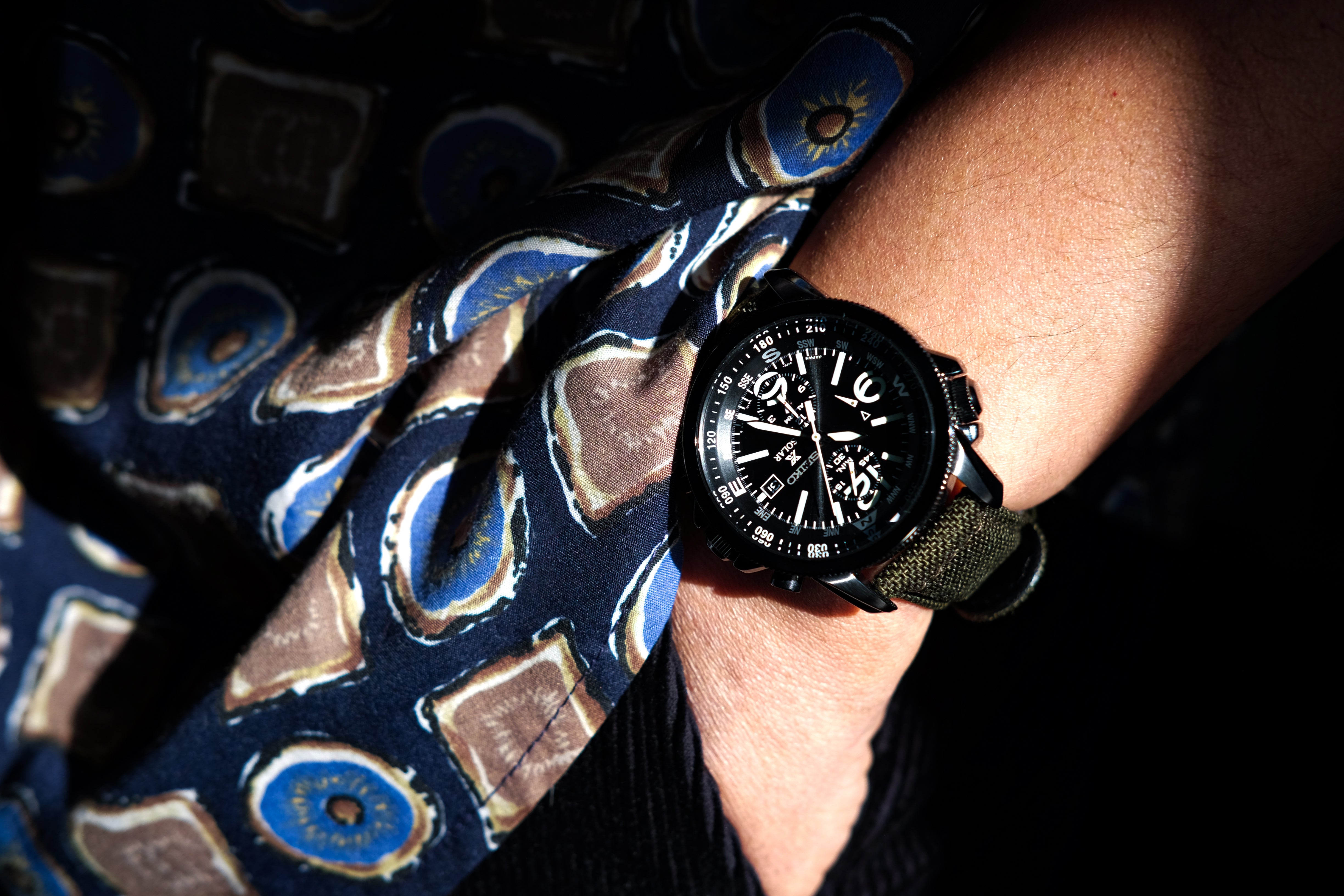
A NATO strap is a single length of woven nylon that threads behind the watch case and through both spring bars. NATO straps are light, quick to swap and easy to clean, which makes them popular on field, diver's and casual watches. Single-pass nylon, canvas, sailcloth-effect and perlon (woven) straps give a similar relaxed look in different textures. Because a NATO adds a layer under the case, the watch sits a little higher on the wrist.
Rubber and silicone watch straps

Rubber and silicone straps are made for sport, sweat and water. They don't absorb moisture, rinse clean and stay comfortable in the heat, which is why they're standard on many diver's and sports watches. Thicker natural rubber or vulcanised rubber feels more substantial than soft silicone, and hybrid straps combine a leather look on top with rubber underneath.
Mesh and Milanese straps

A mesh or Milanese strap is woven from fine metal links. It has the durability of steel with a lighter, more flexible feel, and most adjust with a sliding clasp, so you can get an exact fit without removing links. Mesh suits slim, minimalist watches.
Metal watch bracelets

A stainless steel watch bracelet is the most durable everyday option and works in the water with the right watch. Common styles include the three-link oyster-style bracelet, the five-link jubilee bracelet for a dressier sparkle, and integrated bracelets that flow straight out of the case, as on many sports watches. Bracelets are sized by adding or removing links. See our guide on how to remove links from a watch bracelet. Titanium bracelets are lighter again, and two-tone and gold-tone finishes dress a bracelet up.

Not sure which suits you? Think about where you'll wear the watch most. Office and evenings: leather or mesh. Beach, gym and travel: rubber, NATO or steel. One watch for everything: a steel bracelet, plus a leather strap to switch to for occasions.
Which strap is best for you?
| Strap type | Best for | Water | Look |
|---|---|---|---|
| Leather | Office, dress, everyday | Avoid soaking (unless water-resistant) | Classic, warm |
| NATO / fabric | Casual, field, travel | Fine; dries quickly | Relaxed, sporty |
| Rubber / silicone | Sport, swimming, heat | Excellent | Sporty |
| Mesh / Milanese | Slim and dress watches | Good (steel) | Minimal, modern |
| Steel bracelet | Everyday, all-rounder | Excellent with the right watch | Versatile |
A strap can only be as water resistant as the watch it's on. If you swim, snorkel or dive with your watch, we recommend a watch with at least 200m water resistance and a screw-down crown, on a rubber strap or steel bracelet. Our watch water resistance guide explains what each rating means.
Watch strap sizes: how to find your lug width
Strap width is set by the lug width: the gap between the two lugs (the horns on the case that the strap attaches to), measured in millimetres. Your new strap needs to match it exactly. A strap that's too narrow leaves gaps and puts stress on the spring bars, and one that's too wide won't fit between the lugs.
How to measure lug width
- Check the specs. Lug or band width is often listed in the watch's specifications or on its product page.
- Look at your current strap. If it fits well, measure its width at the lug end, where it attaches to the case. Many leather straps also have the width stamped on the underside near the lugs.
- Measure the watch. Use a millimetre ruler, or callipers for more accuracy, across the inside gap between the lugs.

20mm or 22mm? Common watch strap widths
Widths usually run from about 12mm to 24mm. Men's watches often use 18mm to 24mm (20mm and 22mm are especially common), while women's watches often sit between 10mm and 20mm, but always measure your own watch rather than going by gender or case size. Don't round up or down; the strap should match the lug width. The one common exception is a NATO strap on a watch with an odd lug width (19mm or 21mm, say): soft woven nylon usually fits 1mm wider, so a 20mm NATO on a 19mm watch.
Strap length
Length is about your wrist, not the watch. Measure your wrist with a soft tape (or a piece of string against a ruler) where you wear your watch, then pick the strap length the maker recommends for that size. Many strap brands, including Hirsch, sell straps in lengths such as M, L and XL. Our watch size guide and lug-to-lug guide explain how the watch itself should fit your wrist.
How to change a watch strap
Most straps attach with spring bars: small spring-loaded pins that sit in holes inside the lugs. Changing a strap at home is straightforward with a little patience.

Quick-release straps
Quick-release spring bars have a small lever on the back of the strap. Slide the lever, angle the strap out from between the lugs, then do the reverse to fit the new strap until you hear it click. No tools needed. Most Hirsch straps use a quick-release system, but some models are made without it; the product name tells you when a strap is non-quick-release.

Standard spring bars (using a spring bar tool)
- Lay the watch face down on a soft cloth. Masking tape over the lugs helps avoid scratches.
- Slide the forked end of a spring bar tool between the strap and the lug, find the spring bar's shoulder, and press it inwards to release it from the lug hole.
- Fit the spring bars into the new strap. The longer, holed side usually goes at 6 o'clock and the buckle side at 12 o'clock.
- Seat one end of the spring bar in its lug hole, compress the other end with the tool, line it up and let it click into place.
- Give each side a firm tug to check both spring bars are seated before you wear the watch.

Curved-end straps and integrated bracelets are made for specific case shapes, so check that a strap is designed for your watch before buying. Swapping from a bracelet to a strap is done the same way: release the bracelet's end links with the spring bar tool.
Fitting in our showroom: if you bought your watch from Watch Direct, our Marrickville showroom team can fit a strap or adjust a bracelet for you. On busy days and during sales we may ask you to come back at a quieter time, so it's worth calling ahead on 1300 725 644. The showroom is open Monday to Friday, 10am to 4pm.
Caring for your watch strap
- Leather: keep it dry, let it air out after a hot day, and rotate straps if you wear one watch daily. Avoid perfume and sunscreen on the leather.
- Rubber and silicone: rinse with fresh water after the beach or pool and dry with a soft cloth.
- NATO and fabric: remove from the watch and hand-wash in mild soapy water, then air-dry.
- Steel bracelets and mesh: a soft brush and warm soapy water clear grime from between the links. Dry thoroughly.
For step-by-step cleaning, see our guide to cleaning your watches and jewellery at home.
Shop watch bands and straps at Watch Direct
Our watch bands and straps range is mostly leather straps from Hirsch, from smooth calfskin to alligator and crocodile-embossed finishes, plus water-resistant performance straps that pair leather with rubber. We also carry Daniel Wellington replacement straps in leather, canvas, nylon and mesh for its own watches. Hirsch straps are offered in a choice of widths (the size option on each product page), so pick the one that matches your lug width.
Looking for a new watch rather than a new strap? Browse men's watches and women's watches by band material, or see our diver's watches if you need a watch for the water.
Frequently asked questions
Do all watch straps fit all watches?
No. The strap width has to match your watch's lug width exactly, and some watches use curved-end straps or integrated bracelets designed only for that case. Most watches with standard spring bars and straight lugs can take a wide range of straps in the right width.
How do I know what band fits my watch?
Measure the gap between the lugs in millimetres, check the width stamped on the back of your current strap, or look up the lug width in the watch's specifications. Then choose a strap length to suit your wrist.
Do I need a 20mm or 22mm watch band?
It depends entirely on your watch. Both are common on men's watches, so measure the inside gap between the lugs. If it measures 20mm, choose a 20mm strap; if it's 22mm, choose 22mm.
Can I change a watch strap myself?
Yes. Quick-release straps swap by hand using the small lever on the spring bar. Standard spring bars need a spring bar tool and a little care to avoid scratching the lugs.
Can a leather watch strap get wet?
Standard leather should be kept dry, because water and sweat stiffen and crack it over time. For swimming or water sports, choose rubber, silicone or a steel bracelet, or a leather strap specifically made to be water-resistant, on a watch with suitable water resistance.
Can Watch Direct fit a new strap for me?
If you bought your watch from Watch Direct, our Marrickville showroom team can fit a strap or adjust a bracelet. On busy days and during sales we may ask you to come back another time, so call 1300 725 644 before visiting.